Affiliate disclosure: Some links on this page are affiliate links. If you purchase through them we may earn a commission at no extra cost to you. Affiliate relationships never influence what we write or how we explain it. — Read our full disclosure
Encyclopedia open

The Pep Expert

The peptide encyclopedia. Plain language, honest evidence.
Featured explainer · BPC-157

BPC-157, explained: what the research actually shows—and where it stops

Body protection compound 157 is one of the most discussed peptides online. We read the studies so you don't have to, then separated what the science actually supports from what's being claimed far ahead of it.

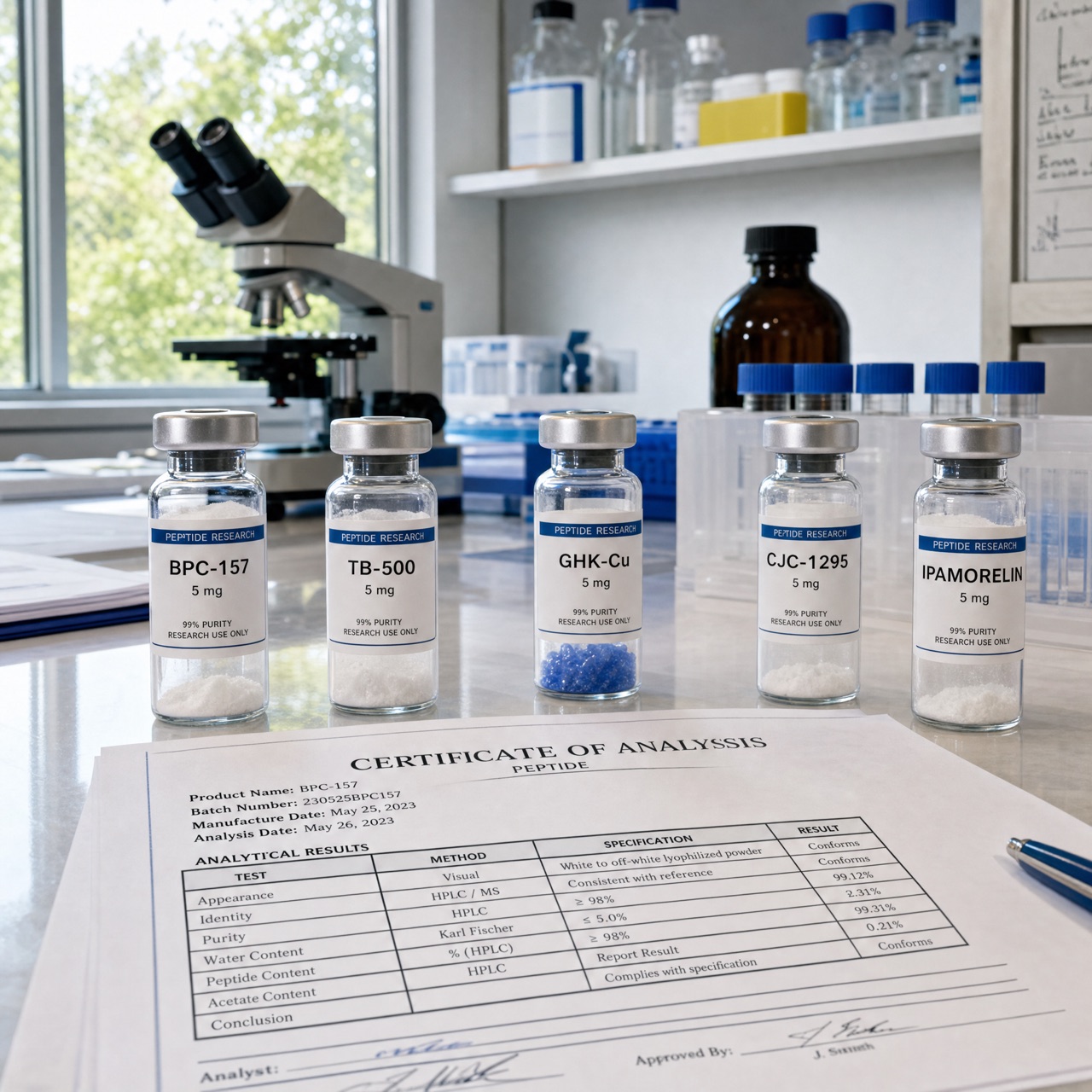
Peptide research vials on a laboratory bench alongside a certificate of analysis
Research context: BPC-157 is studied in preclinical (animal) models. No large-scale human clinical trials have been completed. Vendor claims beyond this evidence base are not supported by current data.
What the research shows
  • Anti-inflammatory effects observed in rodent models at consistent dosing levels
  • Accelerated wound healing demonstrated in preclinical tissue studies
  • Gastroprotective properties replicated across multiple animal studies
  • Appears to interact with the nitric oxide system in animal research
What remains unknown
  • Human safety profile: no large randomized controlled trials completed
  • Effective dosing in humans: animal-to-human translation unvalidated
  • Long-term effects: no multi-year human follow-up data exists
  • FDA approval status: not approved for any human use in the United States
Medically reviewedPharmD checks every explainer
2,400+ cited sourcesEvery claim links to primary literature
Updated monthlyArticles reflect the latest research
Plain language, alwaysNo jargon without a definition

A–Z Peptide Glossary

Browse all explainers →
A
Amino acid The building blocks that link together to form peptides and proteins. Twenty standard amino acids combine in different sequences to create compounds with distinct biological roles. Well established
AOD-9604 A synthetic fragment of human growth hormone intended to target fat metabolism. Studied in animal models; human data is limited to early-phase trials. Limited human data
Acetylation A modification added to some peptides to improve stability or alter how they interact with receptors. Often denoted with an "Ac-" prefix in compound names. Well established
B
BPC-157 Body protection compound 157. A synthetic peptide derived from a gastric protein. Studied extensively in animal models for tissue repair and anti-inflammatory effects; no completed large human trials. Preclinical only
Bioavailability The proportion of a compound that reaches the bloodstream in active form. Peptides often have low oral bioavailability due to digestion, which is why many are studied as injectables. Well established
Binding affinity How strongly a peptide attaches to its target receptor. Higher binding affinity generally means a more potent effect at lower concentrations, but does not guarantee safety or efficacy in humans. Well established
C
CJC-1295 A synthetic analog of growth hormone releasing hormone (GHRH). Research has focused on its extended half-life compared to natural GHRH. Human safety data is limited. Limited human data
COA (Certificate of Analysis) A laboratory document that verifies a compound's identity, purity, and concentration. A COA from an accredited third-party lab, matched to a specific batch, is the minimum documentation to expect from a research vendor. Industry standard
C-peptide A naturally occurring byproduct of insulin production. Measured clinically to assess how much insulin the body is producing on its own. Not a research peptide in the typical sense. Well established
E
Epithalon A synthetic tetrapeptide studied in relation to telomere biology and longevity markers in animal and some early human research. Evidence in humans is preliminary. Emerging
Exogenous Originating from outside the body. Research peptides are exogenous compounds introduced into a biological system to study their effects, as opposed to endogenous peptides the body makes itself. Well established
G
GHRP-6 Growth hormone releasing peptide 6. Stimulates GH secretion via the ghrelin receptor. Has been studied in clinical settings but is not FDA-approved for human use as a standalone research compound. Limited human data
GLP-1 analogs Peptides that mimic glucagon-like peptide 1, a gut hormone involved in blood sugar regulation and appetite. Several GLP-1 analogs (semaglutide, tirzepatide) are FDA-approved drugs. Not all GLP-1 analogs share the same approval status. Well established (approved analogs)
I
Ipamorelin A selective growth hormone secretagogue that stimulates GH release with reportedly fewer side effects than older GHRPs. Preclinical data is available; human clinical data is limited. Preclinical mostly
IND (Investigational New Drug) An application filed with the FDA before clinical trials begin on a new compound in human subjects. A compound with an active IND is in supervised clinical study; one without is not cleared for human trials. Regulatory standard
M
Melanotan II A synthetic analog of alpha-MSH. Studied for tanning and sexual function effects. Not FDA-approved; safety profile not established in controlled human trials at commonly discussed doses. Preclinical / early
MOD GRF 1-29 A modified fragment of GHRH designed for extended activity. Often paired with GHRPs in research protocols. Human data is limited to small studies. Limited human data
P
Peptide A short chain of amino acids (typically 2–50) linked by peptide bonds. Smaller than proteins, peptides can interact with receptors and biological pathways in specific ways, which is why they are studied as potential therapeutic candidates. Well established
PT-141 (Bremelanotide) A melanocortin receptor agonist. The only compound in this class with FDA approval—specifically for hypoactive sexual desire disorder in premenopausal women. Compounded or research versions are not equivalent to the approved drug. FDA approved (Vyleesi®)
Preclinical Research conducted in cell cultures or animal models before human trials begin. Preclinical results are hypothesis-generating, not proof of human effect. Most peptides discussed online are at this stage. Well established (definition)
R
Reconstitution The process of dissolving a lyophilized (freeze-dried) peptide powder into a liquid for use in research. Sterile bacteriostatic water is typically used. Reconstitution method can affect peptide stability. Technical standard
RCT (Randomized Controlled Trial) The gold standard of clinical evidence. Participants are randomly assigned to receive a compound or a placebo, allowing researchers to isolate the compound's effect. Very few research peptides have RCT data in humans. Methodology (established)
S
Semax A synthetic analog of ACTH studied for cognitive and neuroprotective effects. Has been approved for limited medical use in Russia; not FDA-approved in the United States. Emerging
Sermorelin A GHRH analog. Was FDA-approved for pediatric growth hormone deficiency but withdrawn from the US market in 2008. Compounded versions exist; their regulatory status is distinct from the original approved drug. Previously approved (now compounded)
Subcutaneous injection Administration into the fatty tissue just beneath the skin, as opposed to intramuscular or intravenous routes. Many research peptides in animal studies are delivered subcutaneously due to the peptides' poor oral bioavailability. Technical standard

Myth vs. Fact

See all →
Myth

"It worked in studies, so it works in humans." Animal results automatically translate to human outcomes.

Fact

Animal-to-human translation fails more than it succeeds. Many compounds that show strong preclinical results do not replicate in human trials, and some cause unexpected effects. Human trials are needed to establish efficacy and safety.

Myth

"Research only" means it's unregulated and fine to use." The label is interpreted as a loophole, not a genuine restriction.

Fact

"Research only" is a legal status, not a safety certification. The FDA can and does act against vendors who market unapproved compounds for human use, regardless of the label. The phrase doesn't establish safety or effectiveness.

Myth

"Peptides are natural, so they're safer than drugs." Because peptides occur in the body, added exogenous versions are assumed to be harmless.

Fact

"Natural" doesn't mean safe at research doses. Many toxic substances are naturally occurring. Exogenous peptides at studied concentrations can have effects—wanted or not—that haven't been fully characterized in long-term human data.

Myth

"If it has a COA, it's pharmaceutical quality." A certificate of analysis is treated as proof that the compound is what's advertised.

Fact

A COA is only as trustworthy as the lab that issued it. Unaccredited labs, undated reports, and documents not tied to the specific batch you're purchasing offer little actual assurance. The accreditation and batch traceability matter as much as the document itself.

Myth

"Doctors using these means they're approved." Because some clinicians discuss or prescribe certain peptides, the whole class is seen as sanctioned.

Fact

Clinician use doesn't equal FDA approval. Compounded peptides prescribed off-label operate under different rules than FDA-approved drugs. Approval, safety evidence, and clinical use are three separate things that don't always overlap.

Myth

"More peptides together means better results." Stacking multiple compounds is treated as additive or synergistic without question.

Fact

Combination effects in humans are almost entirely unstudied. Even single-peptide human data is thin for most compounds. The interaction effects of combining several unapproved compounds are unknown and cannot be assumed positive.

Evidence levels, explained

How we rate sources →
Robust

Multiple replicated human trials

Randomized controlled trials, meta-analyses, and systematic reviews in human subjects. Results have been independently replicated. This is the standard that supports FDA approval and clinical guidelines.

Emerging

Early human data or consistent animal data

Small human trials, pilot studies, or a large body of consistent animal research across multiple independent labs. Promising but not yet sufficient to draw firm human conclusions. Watch for updates.

Limited

Inconsistent or narrow data

Mixed results across studies, single-lab animal data, or very small human cohorts. A limited rating means the research exists but cannot yet support strong claims. More and better studies are needed.

Preclinical

Cell culture or animal studies only

Research conducted in vitro (lab dishes) or in animal models. This is the earliest stage of evidence. It tells us a compound may be worth further study, not that it works or is safe in humans.

How we apply these levels

  • Every glossary term and explainer article carries an evidence-level chip so you always know what type of research backs the description.
  • We do not write as though preclinical findings are human findings. The distinction is marked clearly in every article.
  • Evidence chips are reviewed when articles are updated. Levels can move up as better research is published.
  • We list the specific studies behind a rating in each article's sources section, linked to PubMed or the primary publication.
  • If you notice an error or outdated citation, our corrections process is open. See the link in our footer.

Recent explainers

All articles →
Vendor basics

How to read a peptide COA without getting fooled

Most vendor documentation passes a quick glance. Here are the five specific lines that separate a trustworthy certificate from one that's little more than a formatted PDF.

8 sourcesReviewed May 28 · 6 min read
Research literacy

Why animal studies don't tell you what you think they tell you

Rodent research is the foundation of most peptide interest online. But the pipeline from "worked in rats" to "works in humans" has a long history of failure. Here is what the gap actually looks like.

14 sourcesReviewed May 22 · 9 min read
Regulatory

What "compounded" means when a clinician prescribes a peptide

Compounded peptides occupy a specific and often misunderstood regulatory lane. We explain what compounding pharmacies are allowed to do, what they aren't, and why the difference matters for anyone considering a peptide prescription.

11 sourcesReviewed Jun 1 · 8 min read
GLP-1 class

Semaglutide vs. peptides: why the FDA approval distinction matters

Semaglutide is a peptide with a clear regulatory pathway. Most peptides sold for research are not in the same category. The difference between "approved GLP-1 analog" and "research peptide" is not a technicality—it has real implications for safety and access.

16 sourcesReviewed May 30 · 7 min read

Our reviewers

Editorial standards →
Dr. Priya Nair
Dr. Priya Nair Science editor Biochemistry PhD. Writes and edits all primary explainers. Focuses on translating preclinical research accurately.
James Cho, PharmD
James Cho, PharmD Medical reviewer Pharmacist with compounding specialty. Reviews all articles for regulatory accuracy and safety boundary compliance.
Dr. Marcus Osei
Dr. Marcus Osei Clinical advisor Board-certified internist. Advises on clinical context, patient-facing language clarity, and evidence grading.
Dr. Yuki Tanaka
Dr. Yuki Tanaka Research analyst Molecular biology researcher. Manages source collection, PubMed citation verification, and evidence-level assignments.

Latest from The Pep Expert